
Canadian Education Council
National Workforce Program
National Workforce Transformation Program
Bridging the gap between academics and the global workforce through the International Employment License (IEL) — enabling nations to strengthen global workforce readiness, reduce unemployment, and open international job pathways for graduates.
Recognized by 3M+ employers and 6,000+ universities worldwide.
Powered by the Canadian Education Council, a federal non-profit under the Ministry of Foreign Affairs.

The International Employment License (IEL) is a government-backed bridge between academic learning and global labor market expectations. IEL helps countries modernize workforce development, align academic outcomes with global employer needs, and improve national employment results.
With job-aligned insights, AI-driven matching, and national workforce dashboards, IEL enables ministries to measure, enhance, and scale global workforce readiness at a national level.
Recognized by 3M+ employers and 6,000+ universities worldwide.
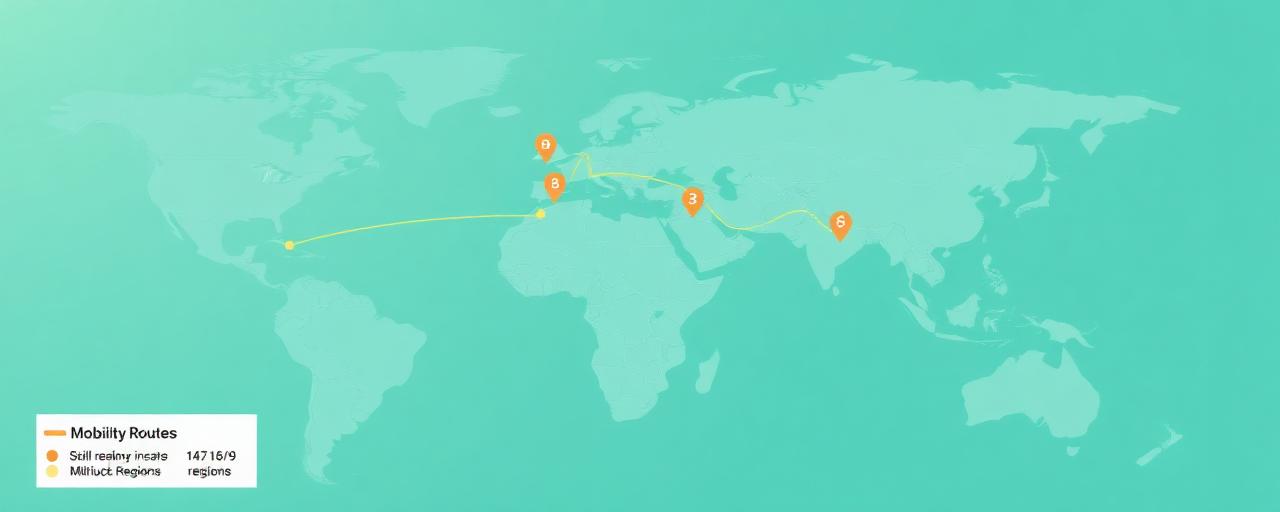
Key Government Benefits
National Workforce Intelligence Dashboard
Real-time visibility into skills, strengths, English levels, readiness indicators, and job alignment across all regions.
Global Workforce Readiness Pathways
A structured transition from academic learning to global job markets, enabling confident mobility for graduates.
Workforce Modernization & Policy Alignment
Supports national 2030/2050 strategies, education modernization, and international competitiveness.
Reduce Unemployment & Boost Mobility
Equips graduates with globally aligned job pathways, reducing youth unemployment and expanding economic mobility.

National Workforce Challenges
Skill Misalignment
University outcomes often do not reflect the competencies required by global employers.
Insufficient Global Readiness
Students lack structured pathways into international labor markets.
Lack of National Data
Governments cannot track readiness, alignment, or national skill needs in real time.
A National Framework for Global Workforce Readiness
Connecting academic learning with global labor market requirements.
Academic-to-Workforce Alignment
IEL identifies student strengths, job alignment, and readiness based on global employer expectations.
International Job Matching Activation
AI-driven matching connects graduates to verified employers in 50+ countries.
National Workforce Intelligence Dashboard
Policy-grade analytics, forecasting, university comparisons, and national performance indicators.
Policy & Impact Measurement
Monitor unemployment reduction, ROI, national competitiveness, and mobility outcomes.
89%
Readiness Rate
42K
Certified Graduates
156
Partner Employers
Real-Time National Workforce Readiness Intelligence
Prepare Your Graduates for the Global Workforce
IEL connects talent to verified employers globally using AI-driven job-fit ranking and competency-based matching.

Why Governments Partner With CEC
Government FAQ
60 questions answered across 7 categories
How does IEL support our national education and employment strategy?
IEL provides a unified, job-aligned readiness framework that helps governments align academic outputs with actual global workforce needs.
How does the program bridge the gap between academics and the global workforce?
IEL maps student strengths, competencies, and English levels to international job standards, creating a direct link from education to employment.
How does IEL contribute to national 2030/2050 development goals?
IEL provides a unified, job-aligned readiness framework that helps governments align academic outputs with actual global workforce needs.
Can IEL reduce youth unemployment?
Yes. It improves job readiness, job alignment, and global mobility—all of which increase employment outcomes.
How does IEL strengthen national global competitiveness?
By producing graduates who meet global workforce standards, attracting employers, and improving the country’s talent ranking.
Does IEL align with World Bank, UNDP, OECD, and ILO frameworks?
Yes. IEL supports competency-based workforce development, mobility, and national skill alignment.
Does the program support digital transformation initiatives?
Yes. It introduces AI-based job matching, predictive analytics, and digitalized readiness assessments.
Is IEL recognized internationally?
Yes—recognized by 3M+ employers and 6,000+ universities worldwide.
Can IEL help reduce national brain drain?
Yes—recognized by 3M+ employers and 6,000+ universities worldwide.
Does IEL support National Employment Policies (NEP)?
Yes. IEL provides governments with real-time data needed to design and refine employment strategies.
How long does national implementation take?
Between 4–8 weeks, depending on scale.
Can this be scaled to all universities in the country?
Yes. IEL is designed for national deployment across hundreds of institutions.
Do institutions need new infrastructure or hardware?
No. IEL is cloud-based and works with existing university systems.
What does the onboarding process include?
Training, integration, capacity building, reporting setup, and ministry dashboard configuration.
Who manages the program locally?
The Ministry designates administrators; CEC provides direct support through regional directors.
Does IEL disrupt existing university exams?
No. It complements them by adding job-aligned readiness indicators.
Does government need to hire new staff?
No—IEL is turnkey. CEC supports implementation.
Can the government run pilots first?
Yes—National Pilot Programs are available.
Can IEL be integrated with national ID or student information systems?
Yes—optional integrations are available.
How many students can take IEL per year?
Unlimited; the system is built for national scale.
How do universities participate?
They adopt IEL as their employability and workforce-readiness framework.
Can universities use IEL inside their curriculum?
Yes—often integrated into final year modules, graduation requirements, or career courses.
Does IEL improve universities' global competitiveness?
Yes. Graduates become job-ready, making institutions more attractive to students and employers.
Can universities track their own students' readiness data?
Yes—each institution gets a reporting panel.
What value does IEL provide to academic leadership?
Actionable insights into student strengths, employability gaps, and academic-to-career alignment.
Can private universities join?
Yes—public and private institutions are eligible.
Can colleges and technical institutes join?
Yes. IEL supports all post-secondary institutions.
Does IEL measure soft skills, communication, and personality?
Yes—IEL includes strengths profiling and career alignment.
Does IEL reduce the gap between theory and practice?
Yes—by providing job-aligned indicators used by employers.
Can universities benchmark themselves nationally?
Yes—IEL provides national comparisons.
What does IEL measure for students?
English readiness, job alignment, strengths, skills, communication, and global workforce readiness indicators.
What do students receive after completing IEL?
A verified IEL profile reflecting their strengths, job alignment, and readiness for the global workforce.
Does IEL help students find jobs?
Yes—students get matched through AI to verified employers globally.
Can IEL help graduates with 0–5 years experience?
Yes. IEL is designed for students, fresh graduates, and early-career job seekers.
Does IEL provide clear career direction?
Yes—it identifies roles and industries where a student is most likely to succeed.
Can students use IEL for job applications abroad?
Yes—IEL is internationally recognized.
Does IEL help reduce underemployment?
Yes—job alignment ensures students find roles matching their strengths.
Does IEL help improve English proficiency?
Yes—IEL provides a clear readiness indicator and improvement roadmap.
Are employers verified?
Yes—every employer in the system goes through compliance verification.
How many employers are connected?
Over 3,000,000 global employers.
How many countries participate?
50+ countries across North America, Europe, Asia, and MENA.
Do graduates get guaranteed interviews?
Top job-fit students often receive prioritized interviews from verified employers.
Is IEL used by international companies?
Yes—IEL is recognized across global industries.
Can IEL bring foreign companies into the country?
Yes—verified employers can recruit from the national IEL database.
Does IEL support bilateral workforce agreements?
Yes—IEL helps governments negotiate workforce mobility frameworks.
Is there a cost for governments to run pilots?
Pilot programs are often subsidized or offered at low/no cost, depending on region.
Do ministries receive partnership support?
Yes—each ministry is supported by regional directors.
Can IEL be included in strategic partnerships (MoU)?
Yes—CEC works directly with ministries, councils, and government authorities.
Who manages quality assurance?
CEC ensures all standards, assessments, and processes meet international verification requirements.
Can IEL operate through national agencies?
Yes—IEL can be delegated to workforce authorities, skills councils, or national development agencies.
Is the program sustainable long term?
Yes—IEL is designed for continuous national workforce readiness measurement.
How do we begin the process?
By booking a call with our Regional Directors and exploring a National Pilot Program.
Is there a cost for governments to run pilots?
Pilot programs are often subsidized or offered at low/no cost, depending on region.
Do ministries receive partnership support?
Yes—each ministry is supported by regional directors.
Can IEL be included in strategic partnerships (MoU)?
Yes—CEC works directly with ministries, councils, and government authorities.
Who manages quality assurance?
CEC ensures all standards, assessments, and processes meet international verification requirements.
Can IEL operate through national agencies?
Yes—IEL can be delegated to workforce authorities, skills councils, or national development agencies.
Is the program sustainable long term?
Yes—IEL is designed for continuous national workforce readiness measurement.
How do we begin the process?
By booking a call with our Regional Directors and exploring a National Pilot Program.
Transform Your National Workforce Today
Recognized by 3M+ employers and 6,000+ universities worldwide.
Connect With Our Regional Directors
Provide your details so we can prepare a customized national workforce transformation plan for your country.
A regional director will contact you within 48 hours.
Your information is secure and will never be shared externally.